This Month’s Indicator: Domestic Migration
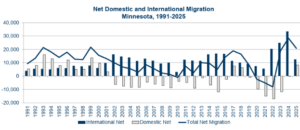
For the first time since 2018, more people are moving to Minnesota from other states than leaving. After years of net domestic outmigration, this shift marks a meaningful change in direction—and an important signal for business leaders across the state.
Between 2024 and 2025, Minnesota recorded a net gain of residents through domestic migration, moving the state from the bottom tier nationally to the middle of the pack. While modest in size, the reversal itself matters. It suggests renewed interest in Minnesota as a place to live, work, and build a future.
Why This Matters
Domestic migration is one of the clearest indicators of economic confidence. People tend to relocate where they see opportunity, stability, and quality of life. This recent trend suggests Minnesota is regaining momentum after years of population stagnation—and that investments in education, healthcare, infrastructure, and community amenities are resonating.
For regions like Greater Mankato, this creates real opportunity. Many domestic movers are working age adults and families—exactly the population needed to strengthen local labor markets, support schools, and sustain long term economic growth.
The Challenges Ahead
While the domestic migration news is encouraging, it does not erase Minnesota’s underlying population challenges. Birth rates continue to decline, the population is aging, and overall population growth remains slow. International immigration has long been a critical driver of Minnesota’s population and workforce growth, helping offset these trends by bringing working age residents who support employers, communities, and local economies. Without strong international immigration alongside domestic migration, the state’s labor force constraints will become more acute over time.
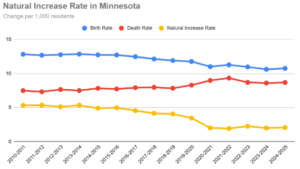
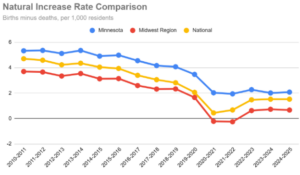
Despite the slowing birth rate in Minnesota, we are better off than most states, ranking 14th among other states for ratio of births to deaths in the country. This outpaces the national average and our Midwest neighbors.
This is where one reality becomes clear: migration momentum depends on business vitality.
People move to places where businesses are hiring, wages are growing, and opportunity feels attainable. While quality of life matters, it is strong, competitive businesses that anchor families and communities. Employers facing rising costs, workforce shortages, regulatory complexity, and capital constraints have less capacity to invest, expand, or create new jobs. When that happens, the ripple effects extend far beyond the business community—impacting household incomes, housing demand, and long term population growth.
Policymakers play an important role in shaping this environment. A predictable, competitive, and efficient regulatory framework—paired with thoughtful approaches to taxes, workforce policy, housing, and childcare—helps businesses remain resilient and adaptable. When regulatory and financial burdens grow faster than a company’s ability to absorb them, the result is often delayed investment, slower hiring, or relocation decisions that undermine regional competitiveness.
Simply put: if businesses struggle to thrive, talent will not stay—and migration gains can quickly reverse.
Why Regional Leadership Matters
Statewide trends are shaped locally. Regions that offer strong job opportunities, accessible housing, childcare options, and vibrant communities will be best positioned to benefit from renewed interest in Minnesota.
This work aligns directly with Pillar 1 of Transforming Tomorrow Together: Creating the Region as a Human Talent Hub—and it is where Greater Mankato Growth (GMG) plays a critical role.
GMG works every day to:
- Support business attraction and expansion
- Strengthen talent pipelines and career pathways
- Advocate for housing, childcare, and workforce solutions
- Position Greater Mankato as a place where people want to move—and stay
By ensuring businesses can succeed, GMG helps turn economic competitiveness into population stability and growth.
A Call to Action: Invest in Talent, Invest in Growth
Minnesota’s renewed domestic migration is an opportunity—but it is not guaranteed to last.
Sustaining it requires regions where businesses can thrive, workers can build careers, and communities invest in the future. Your investment in Greater Mankato Growth is a down payment on the future of your business and our regional economy.
Domestic migration is a signal.
What we do next determines whether it becomes a lasting trend.